22 Jun, 2026 /// No Comments
Sensory Needs & Self-care
Beyond the Surface: Navigating Sensory Needs and Reclaiming Your Well-being
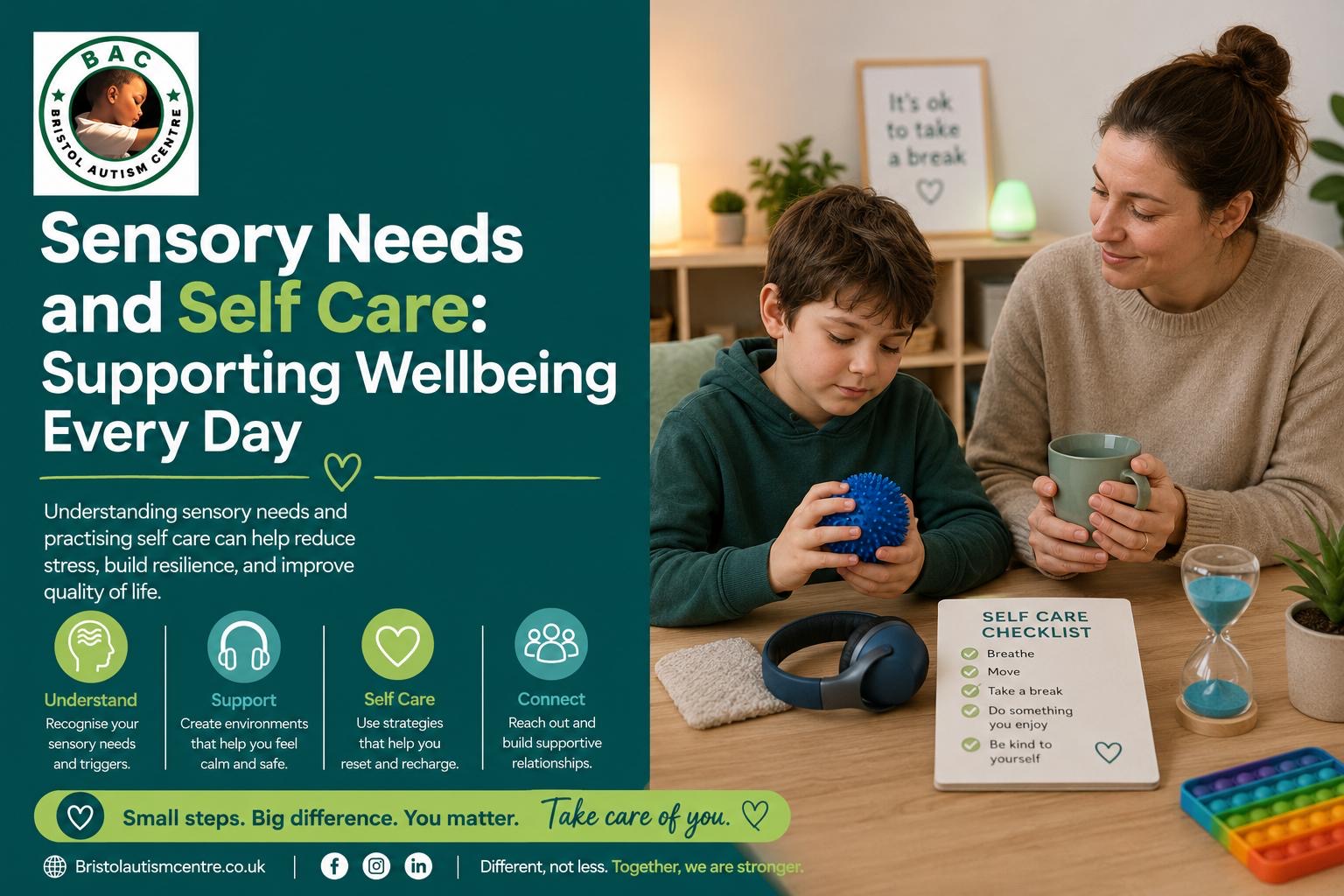
Understanding sensory processing is more than just learning about triggers it is the foundational key to supporting your overall well-being and preventing burnout. Our recent workshop delved deep into the complexities of sensory needs, offering a practical roadmap for identifying your unique profile, implementing effective self-care strategies, and building the advocacy skills necessary to thrive.
What is a Sensory Need?
At its core, a sensory need refers to the specific requirements your nervous system has to maintain regulation, balance, and stability. While we are often taught about the five traditional senses (sight, sound, touch, taste, smell), we actually navigate the world through eight sensory systems.
These include the traditional five, plus:
• Proprioception: Our sense of body awareness and positioning.
• Vestibular: Our sense of balance and movement.
• Interoception: Our awareness of internal body signals (e.g., hunger, thirst, heart rate, or toileting needs).
Sensory experiences are driven by how your nervous system interprets information. For neurodivergent individuals, these signals can be amplified, reduced, delayed, or inconsistent. A sensory need is the action or environment required to process these signals so that the individual can feel comfortable and grounded.
Identifying Your Sensory Profile
Recognising your specific profile is the first step toward effective self-care. Because our nervous systems interpret information differently, we often fall into one or more of these categories:
• Hypersensitivity: An over-responsiveness to input. This might mean the cocktail party effect of overlapping conversations feels overwhelming, or that you are physically sensitive to lights, sounds, or textures.
• Hyposensitivity: A reduced awareness of input. This can manifest as missing crucial cues for hunger, thirst, or toileting needs, sometimes leading to exhaustion or physical strain before the need is recognised.
• Sensory Seeking: Actively pursuing specific input like deep pressure, rhythmic movement, or loud music to achieve regulation.
• Mixed Profiles: It is very common to experience both hyper- and hypo-responses across different sensory systems.
Common triggers such as the chaotic environment of a supermarket, temperature fluctuations, or specific clothing textures can lead to significant physical responses, including irritability, fatigue, migraines, anxiety, or even a full shutdown.
The Importance of Sensory Needs
Why is identifying these needs so important?
Because sensory responses are not just about comfort they are about biological and neurological regulation.
When we ignore sensory needs or push through discomfort, we often increase our risk of burnout. Masking sensory distress trying to appear normal in an environment that is physically painful is exhausting. By contrast, meeting sensory needs early allows for nervous system recovery, better emotional regulation, and improved health management. When we reframe sensory responses not as avoidance or laziness but as vital recovery, we protect our long-term health.
Practical Self-Care and Recovery
Self-care is a necessity for regulation, not a luxury. Strategies discussed included:
• Environmental Adjustments: Using noise-cancelling headphones, dimming lights, and carving out quiet spaces.
• Tools for Regulation: Utilising weighted blankets, comfortable clothing, flexible hairbrushes, or simple sensory reset items like cold water for cooling.
• Recovery Strategies: Prioritising low-demand time, such as meditation, garden time, or resting in a dark room.
Building Advocacy and Boundaries
Reasonable adjustments are tools for equity, not special treatment. Developing advocacy skills involves:
• Establishing Boundaries: Choosing quieter spaces, planning for recovery time, and feeling empowered to say "no" to overwhelming environments without needing to provide an explanation.
• Cultivating Self-Trust: You are the expert on your own nervous system. Your comfort needs no justification.
• Planning: A Sensory Self-Care Plan (documenting triggers, early warning signs, and recovery tools) can keep you grounded, provided the plan remains flexible to adapt to your changing daily needs.
Final Thoughts
Your sensory needs are valid, and your comfort is not an indulgence it is a foundation for your health. When we stop viewing sensory distress as a personal failure and start seeing it as a logical nervous system response, we move from surviving to thriving. By modeling this awareness, we not only protect our own energy but also build a world where future generations feel empowered to advocate for the environments they need. Remember, you are the leading expert on your own body; trust that expertise and prioritise you the care you deserve.
Join Us At The Last Tuesday Of The Month
Sharing these experiences in a community setting reduces shame and provides the validation necessary to turn individual coping into collective strength. If you missed this session, we invite you to join us for our next gathering where we will broaden our focus to interpersonal dynamics:
Next Workshop Topic: Autism Understanding Circle - Communication Styles, Boundaries and Relationships
We look forward to seeing you there as we continue to build a neuro-affirming Bristol community. In the meantime, please explore our online resources and join our social media communities to continue the conversation.